Regenerating Oyster Reefs on the Norfolk Coast
Norfolk Seaweed is undertaking a long-term project to regenerate native oyster reefs to the North Sea, rebuilding habitats that once played a vital role along the Norfolk coast.
For centuries, oyster reefs formed vast, living structures across British and European waters. These reefs filtered seawater, stabilised coastlines and supported rich marine life. Over time, bottom trawling, extraction and wider human impact stripped these reefs away, leaving much of the seabed flat and biologically depleted.
Our work aims to reverse that loss.
Rebuilding a Lost Habitat
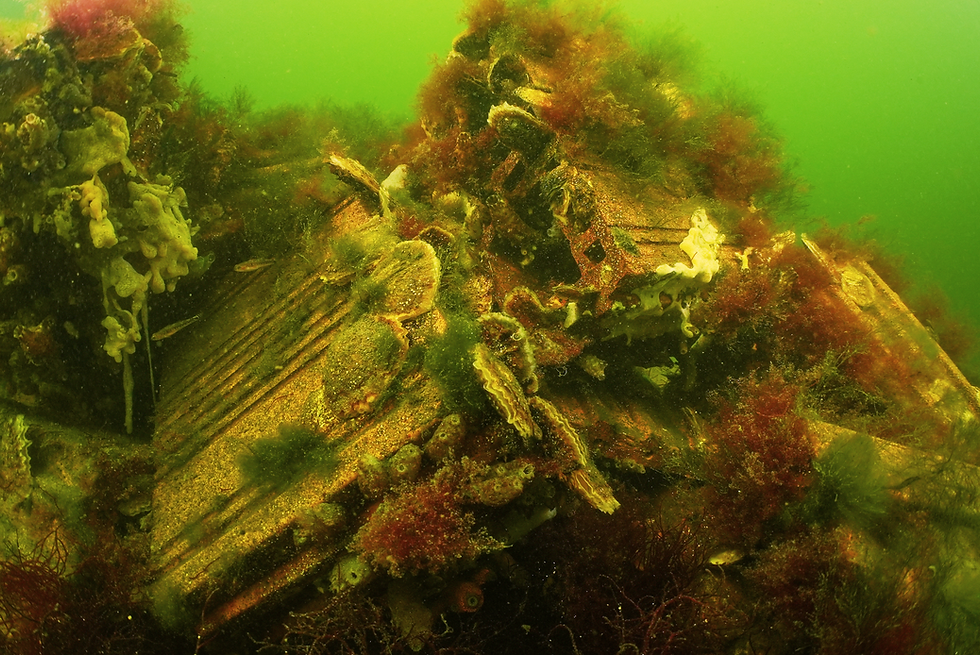
At the centre of the project is the installation of purpose-designed “mother reef” structures made from fired clay. These structures are placed on the seabed around two miles offshore and provide the hard surfaces oyster larvae need in order to settle and grow.
Without such structure, oyster spat drift until they die. With it, they can establish, reproduce and begin forming self-sustaining reefs.
In spring, millions of native oyster spat will be introduced to the mother reefs. Over time, these oysters will grow and spawn naturally, allowing the reefs to expand and, in future, potentially connect with other restoration sites along the coast. This is the first time mother reef structures have been deployed at this scale in UK waters.
Why Native Oysters Matter
Native oysters play a critical ecological role:
Each oyster can filter up to 200 litres of seawater per day, improving clarity and water quality
Oyster reefs act as natural wave breaks, helping to stabilise coastlines
Reefs create complex, three-dimensional habitats that support fish, crustaceans and microorganisms
Even small restored reefs can trigger rapid ecological recovery on previously barren seabeds
Restoration trials elsewhere in Europe have shown that new reefs can support millions of additional marine organisms within a year of installation.
A Project Rooted in Care and Precision
Oyster restoration requires patience and close attention. The licensing process alone took several years and involved extensive environmental assessment. Once installed, the reefs must be carefully monitored, as oysters are highly sensitive to changes in sound, pressure, light and water conditions.
This sensitivity is one of their greatest strengths. Oysters respond quickly to their environment, making them powerful indicators of marine health and resilience.
Environmental and Community Benefits
Although these oysters are not for consumption, the benefits extend beyond ecology. The project supports local marine expertise, employs ecologists, project managers and offshore crews, and helps revive skills historically linked to oyster and mussel farming along the coast.
Healthy oyster reefs also contribute to wider marine resilience. By improving water quality and habitat complexity, they help support fish stocks and long-term sustainability in the North Sea.
Looking Ahead at Oyster Regeneration
Native oyster reefs once shaped the character of these waters. Their absence has been quietly felt for generations. By restoring them, we are not simply protecting what remains, but actively rebuilding what has been lost.
This is long-term work, measured in years rather than months. But the outcome is lasting: healthier seas, richer biodiversity and a living seabed capable of supporting marine life well into the future.
Quietly and steadily, the North Sea is being given the chance to recover.


Comments